Benefits of Exercise

Why is Exercise Good for You? See the Top 7 Benefits of Exercise
We’ve all heard about the benefits of exercise and that it’s pretty good for you. But we’re here to break down exactly why that’s true, and how to get started on the path to wellness and joyful movement. So, lace up those trainers and let’s get started.
Exercise has a positive effect on an astounding number of health markers, all the way from heart health to mental wellbeing. Staying active can help prevent injury, as well as stave off disease. Exercise can also be beneficial in pain management.
Understanding why exercise is good for you can provide extra motivation to get started or keep at it if you’re already doing it. So, here goes.
Before starting a new exercise regime, have a talk with your doctor or an exercise professional about what types of exercises and movements are best for you. This will help you to draw up an exercise plan that will provide you with the most benefits and help reduce the risk of injury.
Benefits of exercise
Why is exercise good for you? Let us count the ways.
1. Reduces the risk of disease
Our number one benefit of exercise (no, it’s not weight loss… although that’s on here, too!) is that it keeps you healthy. Regular exercise reduces the risk of and can improve symptoms of back or joint pain.1 Some diseases can be risk factors for developing joint or body pain, making this a particularly important benefit of exercise from a pain reduction standpoint.
2. Reduces the risk of injury
Exercise strengthens your core, the muscles in your body that keep you upright. A strong core means improved balance. Good balance can prevent painful falls, a common cause of injury. Beyond preventing falls, stronger muscles can serve to protect your joints by increasing joint stability, helping them and supporting them when they make movements. Not only can this lead to improved joint health, increased joint stability can reduce risk of injury in some cases (especially if it reduces your risk of falling).
3. Maintains good mental health
The benefits you get from exercise impact on both your physical and mental wellbeing. Research shows that physical activity can boost self-esteem, mood, sleep quality and energy, as well as reduce the risk of stress.2 This can have a positive impact on pain management. Pain, after all, affects us mentally and emotionally, as well as physically. With a little mind over matter, boosting your mood can help alleviate the negative emotional effects of pain.

4. Helps maintain a healthy weight
Exercising, especially with joint pain, may seem overwhelming, but moderate exercise can help ease your pain and help you to maintain a healthy weight.3 Maintaining a healthy weight can mean that less pressure is placed on your joints as you move throughout your day, for instance when walking, going up stairs, or even bending down. Over time, this may help ease joint pain.4

5. Keeps you mentally sharp
Exercise prompts your body to release proteins and other chemicals that improve the structure and function of your brain. Taking a walk around the block can actually improve your mental acuity and maintain your memory.5 In fact, if you have a desk job – or any situation in your life that has you sitting for extended periods of time – try getting up and taking a quick walk around the office every so often. This can keep you motivated and engaged in your work. Added bonus – inserting some movement into your day can help ease pain caused by bad posture.
6. Strengthens your bones and muscles
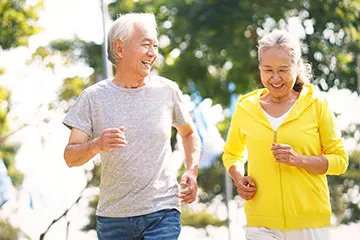
Research has shown that exercise can help improve, or at the very least maintain, bone density.6 The more you exercise, the stronger your muscles will grow. This can help decrease pain in your joints.7 Strengthening your muscles – especially your core, shoulder and back muscles – can also go a long way in correcting bad posture, a big culprit for body pain. (Hello, sitting all day in front of a computer!)
7. Benefits osteoarthritis
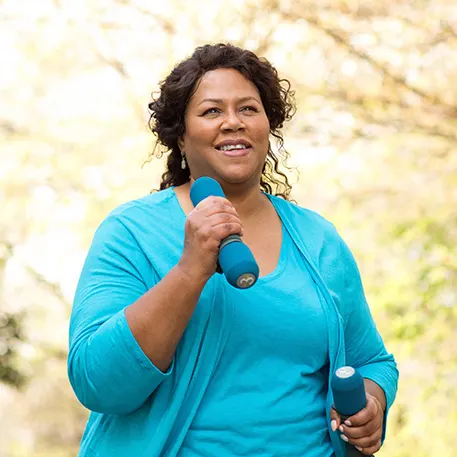
Exercising is crucial for people with osteoarthritis (the most common type of arthritis)8, as it increases strength and flexibility, helps reduce joint pain and combats fatigue. It can reduce the consequences of osteoarthritis and also help with weight loss, which has been proven to significantly decrease the risk of developing knee osteoarthritis.
Sometimes it can be hard to keep active and exercise, but making that extra effort to get moving is really worthwhile. The recommended amount of exercise for anyone aged from 18 to over 65 is half an hour a day for at least five days a week – but this is a minimum guideline. For real health benefits, the time spent exercising should be doubled; the more exercise you do, the better it is for you.9
How to start exercising
Starting an exercise routine can feel daunting if you haven’t been active for a while, which is completely understandable. With a few exercise tips and ideas for approachable, doable activities, anyone – yes, including you, too – can get started.
Here are some tips on how to start exercising:
1. Plan!
Even the best intentions sometimes fail if there isn’t a solid plan behind them. A good plan includes details like the time, place, and duration of your exercises. Decide when you are going to exercise and what you’re going to do. Make sure you have the right equipment. Do your shoes fit?
Do you have an outfit you’ll feel comfortable in? If not, go get whatever you need. Having a plan in place will help your chances of success.
2. Start small
Making a plan that takes you from 0 to 60 can feel intimidating, stopping you in your tracks before you’ve even started. Set small goals for yourself. Maybe you’d like to make it just to the end of your street and back. Maybe simply adding five minutes of stretching in the morning will get you going. Don’t forget: doing a little but often, ultimately adds up to a lot.
3. Find something you can stick with
This usually means finding an activity that you enjoy. This may mean going for a bike ride or taking a walk on the beach or through a favourite nature reserve.
4. Get an accountability partner
Having someone else by your side, keeping you accountable – while keeping you company, too! – can make all the difference in sticking with your resolve to get some regular exercise into your life. Find a friend to check in with about your exercise goals. You may even want to exercise together, as well. Being accountable to someone else will keep you on track for success.
5. Keep it low impact
Low-impact exercise or exercise that goes easy on your joints (think swimming, taking a walk, or yoga) will help you prevent injury, especially if you are just starting out on the exercise lifestyle.
6. Reward yourself
You’re doing a great job. So tell yourself that! From beginner to advanced, positive reinforcement is important for you regardless of what stage of exercising you’re at. If you got up off the couch to get some exercise in, treat yourself.
Exercise ideas for beginners
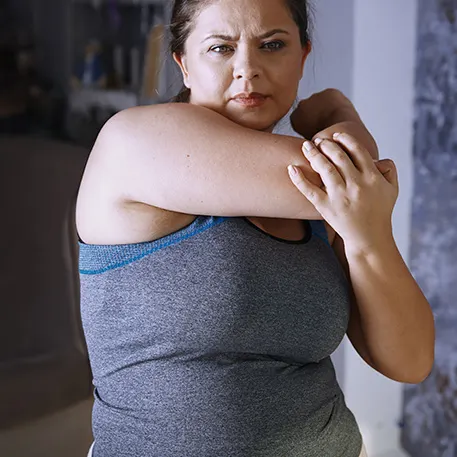
Here are some exercise ideas for you if you’re just starting out:
Stretch
Go for a walk
Find an easy yoga routine
Take a bike ride
Do exercises using just your body weight, such as squats
Every person and situation is different; therefore, the exercises should be customised according to your personal needs. For instance, if you sit in front of the computer all day and suffer from neck or back pain due to poor posture, you could incorporate stretches into your daily routine, as stretching stiff muscles helps with mobility. Or if it is painful to walk or run, you could try swimming or yoga, which might be kinder on painful joints.
Whatever you choose, remember that some exercise is better than none and the fitter you get, the better you should feel as you start to restore the joy you get from movement!
1 “Exercise and chronic disease: Get the facts” Mayo Clinic.https://www.mayoclinic.org/healthy-lifestyle/fitness/in-depth/exercise-and-chronic-disease/art-20046049 https://www.mayoclinic.org/healthy-lifestyle/fitness/in-depth/exercise-and-chronic-disease/art-20046049 Accessed on 01Apr2020
2 Depression and Exercise: a Clinical Review and Management Guideline” Asian J Sports Med 2015 NIH. https://www.ncbi.nlm.nih.gov/pmc/articles/PMC4592762/ https://www.ncbi.nlm.nih.gov/pmc/articles/PMC4592762/ Accessed on 25 Apr 2020
3 AUK Chief Medical Officers’ Guidelines 2011 Start Active, Stay Active. https://www.gov.uk/government/uploads/system/uploads/attachment_data/file/541233/Physical_activity_infographic.PDF https://www.gov.uk/government/uploads/system/uploads/attachment_data/file/541233/Physical_activity_infographic.PDF Accessed on 02.02.2018., World Health Organisation (WHO) Global Strategy on Diet, Physical Activity & Health. http://www.who.int/dietphysicalactivity/pa/en/ http://www.who.int/dietphysicalactivity/pa/en/ Accessed on 02.02.2018.
4 “Why weight matters when it comes to joint pain” Harvard Health Publishing, Harvard Medical School. https://www.health.harvard.edu/pain/why-weight-matters-when-it-comes-to-joint-pain https://www.health.harvard.edu/pain/why-weight-matters-when-it-comes-to-joint-pain Accessed on 24 April 2020
5 “Regular exercise changes the brain to improve memory, thinking skills” Harvard Health Publishing, Harvard Medical School. https://www.health.harvard.edu/blog/regular-exercise-changes-brain-improve-memory-thinking-skills-201404097110 https://www.health.harvard.edu/blog/regular-exercise-changes-brain-improve-memory-thinking-skills-201404097110 Accessed on 01Apr2020
6 “The Effectiveness of Physical Exercise on Bone Density in Osteoporotic Patients” BioMed Research International 2018 https://www.ncbi.nlm.nih.gov/pmc/articles/PMC6323511/ https://www.ncbi.nlm.nih.gov/pmc/articles/PMC6323511/ Accessed on 01 Apr 2020
7 “The pain-relieving qualities of exercise in knee osteoarthritis” Open Access Rheumatol NIH 2013. https://www.ncbi.nlm.nih.gov/pmc/articles/PMC5074793/ https://www.ncbi.nlm.nih.gov/pmc/articles/PMC5074793/ Accessed on 24 April 2020
8 UK Chief Medical Officers’ Guidelines 2011 Start Active, Stay Active. https://www.gov.uk/government/uploads/system/uploads/attachment_data/file/541233/Physical_activity_infographic.PDF https://www.gov.uk/government/uploads/system/uploads/attachment_data/file/541233/Physical_activity_infographic.PDF Accessed on 02.02.2018. World Health Organisation (WHO) Global Strategy on Diet, Physical Activity & Health. http://www.who.int/dietphysicalactivity/pa/en/ http://www.who.int/dietphysicalactivity/pa/en/ Accessed on 02.02.2018.
9 “Global Strategy on Diet, Physical Activity, and Health” World Health Organization. https://www.who.int/dietphysicalactivity/factsheet_adults/en/ https://www.who.int/dietphysicalactivity/factsheet_adults/en/ Accessed on 15 May 2020
Let’s get you moving again. Try our range of medicated Voltaren gels and tablets, for effective pain relief. Find out which is the best fit for you.

Knee pain, elbow pain, back pain, neck pain. Pain relief is not one-size-fits-all. Whatever kind of body pain you’re experiencing - Voltaren can help you. Learn all about the causes, symptoms, and pain relief options for the type of pain you’re experiencing so you can get back to doing those little things that bring you joy.