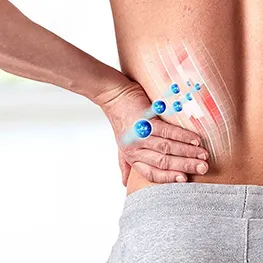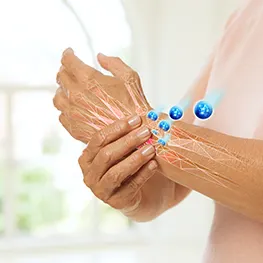
Different Types of Pain and How to Talk About Them?

Different Types of Pain and How to Talk About Them

Pain is caused by your nerves passing a message to your brain, via your spinal cord. Your brain interprets the pain, and tells your body how to respond to get away from, or stop the pain.1
There is sadly no getting away from the effects of ageing – no matter how much all of us wish it were otherwise!
Bone density decreases, metabolism slows, and you begin to lose muscle mass – as much as 3 to 5 percent per decade, beginning in your 30s, and for men, up to 30 percent of total muscle mass over a lifetime.2
Thanks to the wear and tear of daily life, as well as the effects of any injuries or illnesses, joints can become stiff and tender. Normally cartilage at the end of your bones cushions your joints and absorbs shock. However, with age, cartilage begins to wear down leading to more pain and swelling in the joints. This is osteoarthritis, and is a common condition that affects many older adults.3
But while there are all sorts of physical changes that happen with age, no one wants it to stop them doing all the things they love, whether that is as simple as going for walks with a friend, or dancing at a family birthday party. So, it is a good tactic to identify the kind of pain you might be suffering, so you can take positive steps to rectify - or at the very least reduce – its impact.
While pain is something that has been felt almost universally, each pain experience is individual. Understanding some of the types can make it easier to describe what you are feeling, when talking to a healthcare provider. It is quite possible to suffer from more than one type of pain at a time, which can make things a little confusing, but arming yourself with knowledge is a step in the right direction.
Some of the main ones are:
acute pain
chronic pain
inflammatory pain
Acute pain vs chronic pain | Generally sudden, short-term pain, vs persistent, on-going pain |
Inflammatory pain | The body’s protective response when a specific area is damaged in some way |
Below is an overview of each of these kinds of pain and what they might feel like.
Acute pain normally comes on suddenly, and may be thanks to illness, injury, or surgery. It can feel sharp and intense, but thankfully will go away when the reason for the pain has been dealt with, or the tissue has healed. It is important to make sure it is treated appropriately, otherwise acute pain can become chronic pain.
Examples of causes across the whole spectrum of pain are:
Sprains
Bruises
Over-exertion when exercising
Burns
Broken bones
Surgery
It can be very draining to suffer from chronic pain, as it is persistent, and can last for months, or even years. The pain level can vary from day to day, from mild to severe. Sometimes the root cause of the pain is unknown, but other times it is due to a past injury. Frustratingly, even though you may have healed after the original injury, the pain can hang around.
Examples of causes are:
frequent headaches
arthritis
back pain
Inflammatory Pain can be specific to one area, and is often described as a dull ache, sometimes accompanied by redness, swelling and the area becoming hot. Inflammatory pain is caused by the body’s protective response when the body becomes damaged in some way.
So back to that original question from the doctor: ‘Can you tell me what the pain is like?’ It may help to keep a ‘pain diary’, and your doctor might ask you to do just this too!
A pain diary is a daily note of:
What pain that you have had that day, if any
How long the pain lasted
If the pain (or different types of pain) came and went through the day and night or was constant
If you feel like anything in particular caused that pain (from activities and physical exertion you did to how you slept or what you ate or if you were under stress)
How it makes you feel
It is important to rate the intensity of pain out of 10 as well; from 1 being tolerable or mild, right up to 10 when it’s unbearable. Everyone will have different scales which is why it’s really important to measure your pain, against your own past experience
There are pain or symptom tracker apps available that can help you keep a constant record of this.
It is good to think of the words you might use to describe your pain before your appointment. Descriptive words to consider might be:
stabbing
burning / freezing
cramping
stinging
tingling
numbness
aching
shooting
When you do talk to your doctor, take the time to explain your pain and talk through your diary! They may seem busy, however, they are genuinely concerned and want to help you find the best solution as quickly as possible, they can only know what you tell them. Then once the doctor is armed with all the information, you will be able to come up with a management plan together, whether that is using pain-relieving medication or taking steps to relieve it through methods such as exercise or physiotherapy.
Remember, finding the best way to describe the pain, helps put you back in control of it. Especially if it’s all encompassing, once you are in control and have a management plan, you can start to think beyond the pain and to the joy that restored movement can bring.
How Does The Nervous System Work? https://www.ncbi.nlm.nih.gov/books/NBK279390/ https://www.ncbi.nlm.nih.gov/books/NBK279390/ 10.05.20
Preserve Your Muscle Mass http://www.health.harvard.edu/staying-healthy/preserve-your-muscle-mass www.health.harvard.edu/staying-healthy/preserve-your-muscle-mass 11.05.20
Osteoarthritis, https://my.clevelandclinic.org/health/diseases/5599-osteoarthritis-what-you-need-to-know https://my.clevelandclinic.org/health/diseases/5599-osteoarthritis-what-you-need-to-know 11.05.20
Explore Voltaren’s products for pain relief
Let’s get you moving again. Try our range of medicated Voltaren gels and tablets, for effective pain relief. Find out which is the best fit for you.

Learn all about the causes, symptoms, and pain relief methods for the type of pain
you’re experiencing so you can get back to doing those little things that
bring you joy.
Learn about joint pain relief to help you regain your joy of movement
Learn tips to strike the right balance and find relief for your knee pain